


Caravan Tyre Pressures: The Complete Australian Guide
Ask ten caravanners what pressure they run and you'll get ten different answers — and at least six of them are guessing. Tyre pressure is the single biggest factor in how your van tows, how long your tyres last, and whether you make it to the campsite without drama. Here's how to get it right, without the folklore.
Start with the placard, not the servo guess
Every caravan built to Australian standards has a tyre placard — usually riveted near the drawbar or inside a front boot lid. It lists the recommended cold pressure for the tyres fitted at manufacture, based on your van's ATM. That number is your starting point.
One trap: the number moulded into the tyre sidewall is the maximum pressure the tyre can hold, not the recommended running pressure. Pumping to sidewall max on a lightly loaded single-axle van is how you end up with a bouncing, sway-prone tow and a centre-worn tread.
No placard, or you've changed tyres since? Work off the load. Weigh the van loaded (a public weighbridge costs a few dollars), split the weight across the tyres, and match it against the tyre manufacturer's load-inflation table. Or ring a tyre shop that deals with vans — the good ones will sort you in five minutes.
The 4psi rule — your free accuracy check
The old 4psi rule is still the simplest sanity check going:
Check pressures cold (before you've towed more than a couple of kilometres).
Drive an hour at highway speed, then check again while hot.
If pressure rose about 4psi, you started about right.
Rose 6psi or more? You started too low — add air. Rose barely 2psi? You may be over-inflated — let a little out.
It works because pressure rise tracks heat, and heat tracks flex. The right cold pressure produces the right amount of flex. Too little air means too much flex, and flex is what delaminates and blows tyres.
Single axle vs tandem
Single-axle vans put all the load on two tyres, so they usually run higher pressures — often in the 40–50psi range depending on load and tyre size. Tandems spread the load over four, typically landing somewhere in the 35–45psi band. These are ballpark figures only — your placard and load-inflation tables beat anything you read on a forum, including this one.
Coming off the bitumen? Drop and slow
On corrugated gravel, most experienced tourers drop pressures by 15–20 per cent and cap speed at about 80km/h. The softer tyre absorbs corrugations instead of hammering the van's frame, cupboards and your temper. The trade-off is heat — which is exactly why you slow down. Air back up when you hit the blacktop again.
Hot tyres read high. Leave them alone
A tyre that starts at 45psi cold can legitimately read over 50psi after an hour of summer towing. That is normal physics, not a problem — never bleed air from a hot tyre. You'd be setting it under-inflated for the next cold start, which is precisely how blowouts begin.
Checking pressures without the run-around
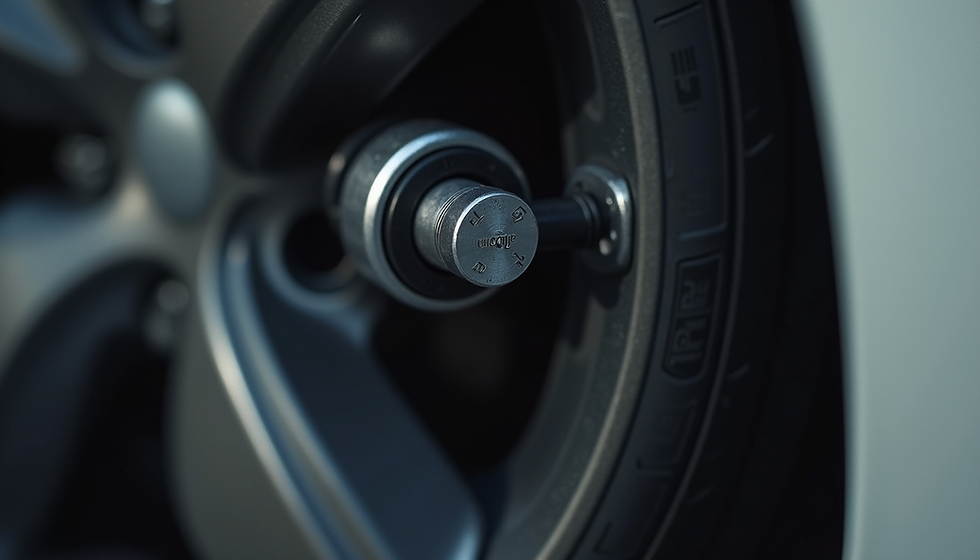
Cold checks with a decent gauge before each travel day are the baseline. But a monthly servo check doesn't help you at 100km/h when a screw has been letting air out for the last 40 minutes. That's the gap a tyre pressure monitoring system closes: live pressure and temperature on every tyre, with an alarm the moment one starts dropping.
For a car towing a single-axle van, the Aura A6 Tow Pack covers all six wheels with a signal booster included. Dual-axle rigs and bigger setups are Guardian territory — see the full caravan TPMS range here.
Quick reference
Placard cold pressure = starting point; sidewall = maximum, not target
Verify with the 4psi rule on your first travel day
Gravel: drop 15–20%, keep it under ~80km/h, reinflate after
Never bleed hot tyres
Check cold before every travel day — or fit a TPMS and watch it live
Not sure what your rig needs? Call us on 0448 626 964 — you'll get someone who's actually installed these systems, not a call centre.

Comments