Questions

Choosing a kit
How many sensors do I need?
One for every tyre you want watched, spares included. Car 4 · + single-axle van 6 · + tandem van 8 · + spares 10 · trucks 18 to 26.
Which kit suits a car on its own?
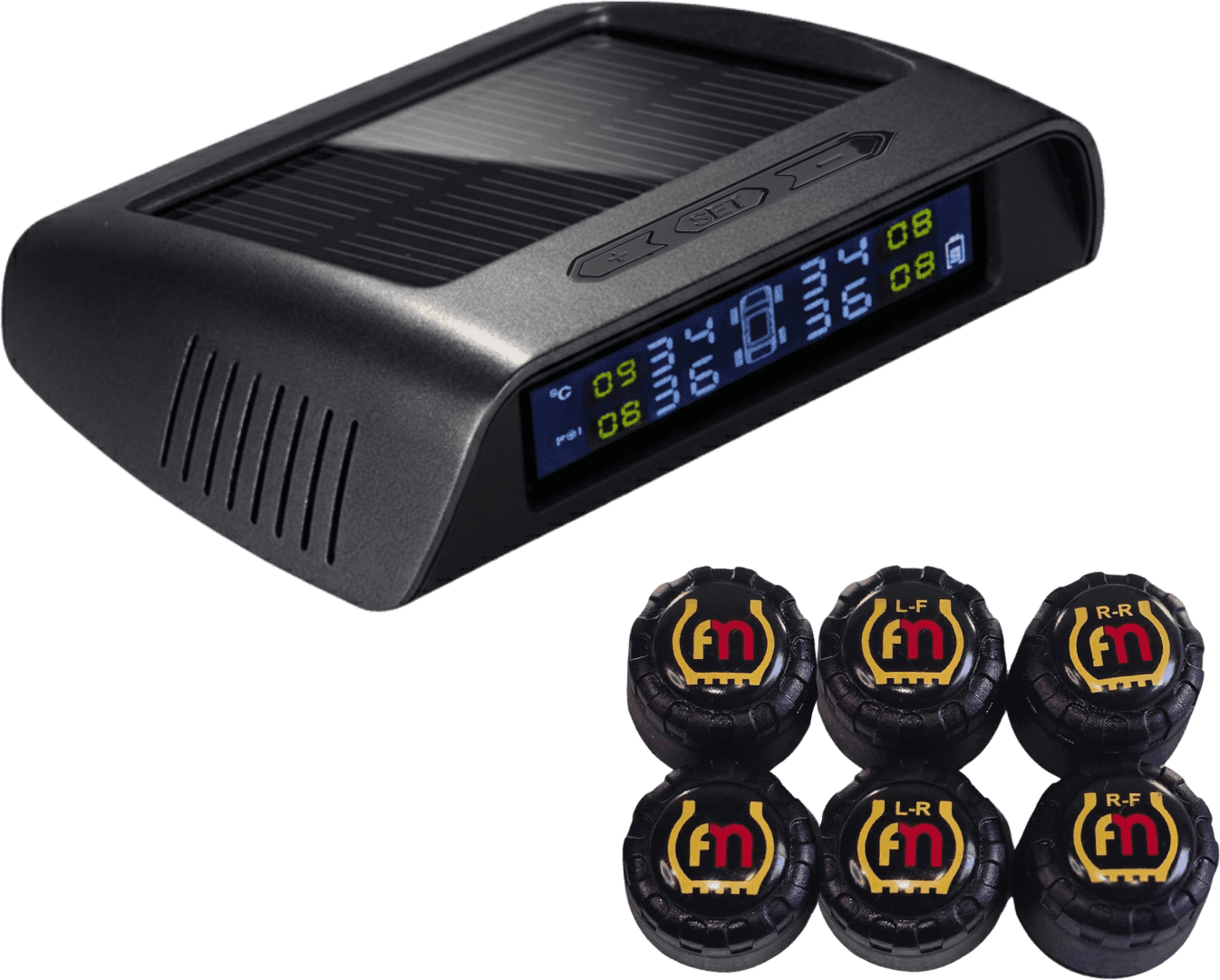
Sentinel ($119) plugs into the 12 V socket. Aura A4 Solo ($179) has a solar screen for the dash. Both watch 4 tyres.
Which kit suits a car and caravan?
Single-axle van: Aura A6 Tow Pack ($249, booster in the box) or Guardian 6. Tandem van: Guardian 8, from $309.
Can I add tyres later?
The screen sets how many tyres a kit can watch, so count the rig you'll tow. More tyres later means a bigger kit.
Does it need an app or a subscription?
No. No app, no subscription. The kit works on its own.
Will it fit an EV?
The external sensors screw onto standard tyre valves, EV or not.

Fitting
Do I need a mechanic to fit it?
No. The external sensors in our kits screw onto the valve, so you fit them yourself. Internal sensors, which we quote by email, go inside the tyre, so a tyre shop fits and balances them.
How long does fitting take?
The Aura's sensors screw onto your valve stems in under 10 minutes. No wiring.
Do the sensors come paired?
Yes, they come paired to the screen. Screw them on and switch on.
Will sensors put my wheels out of balance?
External sensors are light and rarely need rebalancing. Internal sensors are balanced by the tyre shop when fitted.
Can I move the sensors to another car?
Yes. External sensors unscrew, and the screen comes with them.
Can someone steal the sensors?
Aura kits come with anti-theft locking nuts that need the supplied tool to undo.
Sensors and batteries
Internal or external sensors: which is better?
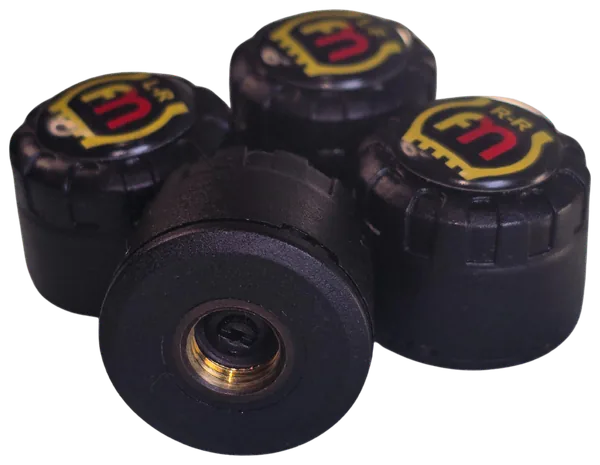
External: fit it yourself and swap the battery yourself. Internal: out of sight, but a tyre shop fits it and the battery usually can't be swapped. We quote internal sensors by email.
What battery do the external sensors use?
A CR1632 coin cell.
Can I change the battery myself?
In external sensors, yes. Internal sensors are usually sealed, so the whole sensor is replaced.
How do I know a sensor battery is low?
The screen shows a low-battery warning for that sensor.
Are the sensors waterproof?
The Aura and Guardian sensors are IP67 rated. Take them off before the wheels go right under at a boat ramp.
What if I lose a sensor?
Spare sensors aren't in the shop yet. Email us and we'll sort it out.
The screen
Does the screen need charging?
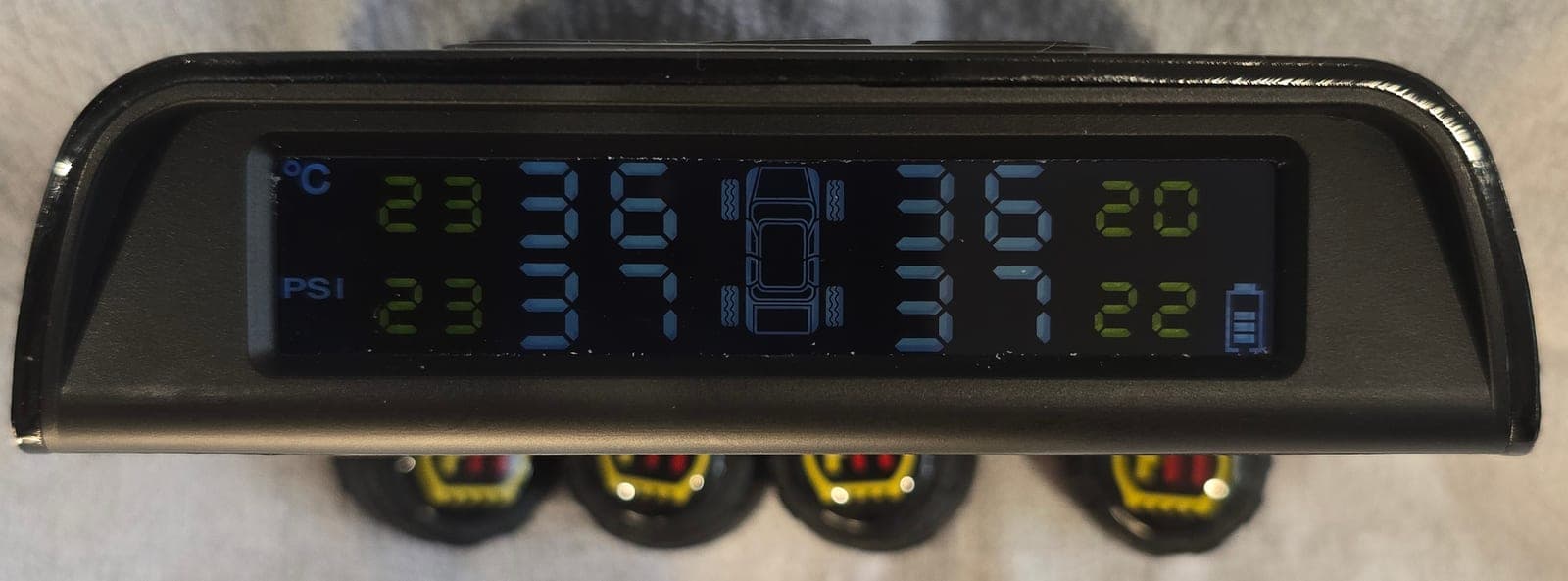
The Sentinel plugs into the 12 V socket. The Aura and Guardian screens are solar charged.
Can it show bar instead of PSI?
Yes. You can switch between PSI and bar.
Can I set my own alarm levels?
Yes. Set your own high and low pressure alarms from the buttons on the screen.
Where does the screen go?
Sentinel sits in the 12 V socket. Aura sits on the dash. Guardian goes on the dash or the windscreen.

Towing and 4WD
Do I need a booster?
A booster carries the signal from the back of a long rig to the screen. Whether you need one depends on your rig. The Aura A6 has one in the box. For Guardian it's an add-on, $80, and takes the range from up to 30 m to up to 60 m.
Can I set the alarm low for beach driving?
Yes. Lower the low-pressure alarm before you air down, so it doesn't beep on the sand.
Will it watch my caravan's tyres?
Yes. Put a sensor on each van tyre and they show on the same screen. The Aura A6 covers any 6 tyres, like a car and a single-axle van; Guardian goes to 26 tyres.
Can it watch my spare?
Yes, if your kit has a sensor for it, so count the spare when you choose. The Aura A6 can cover 4 wheels and 2 spares.
What about water crossings?
A splash is fine. For deep or long crossings, take the sensors off first.
Does it work on a boat trailer?
Yes. Take the sensors off before the wheels go fully under water at the ramp.

Orders, guarantee and warranty
What does the 180 days cover?
Every TPMS kit and the ULTIMATE Bundle. Use it on your rig for six months. Not happy? Send it back for a full refund of the product price. Return postage is on you. The Surge pump on its own has 30-day returns instead.
What about the Surge pump?
Start the return within 30 days of the ship date. New, unused, unaltered and in the original packaging. In one order, TPMS kits and the ULTIMATE Bundle keep the 180-day guarantee and the Surge pump keeps its 30-day returns.
How much is shipping?
Free Australia-wide on orders over $99, and every TPMS kit qualifies. Orders of $99 or less pay $15 flat postage, Australia-wide.
How fast do you send it?
Dispatched within 2 business days by Australia Post, TNT or Aramex. Delivery estimates are on the shipping page.
What's the warranty?
12 months against manufacturing defects, on top of your rights under the Australian Consumer Law.
How do I return something or make a claim?
Email info@flatmate-tpms.com with your order number and what's wrong. We'll reply with the steps.
Where are you based?
Country Victoria, an hour north of Melbourne. We ship Australia-wide.
How do I contact you?
Email info@flatmate-tpms.com. Email is the only way to reach us for now.
Do you do fleet orders?
Yes. Email us your vehicles and tyre count and we'll put a quote together.
When something's up
Why is it beeping?
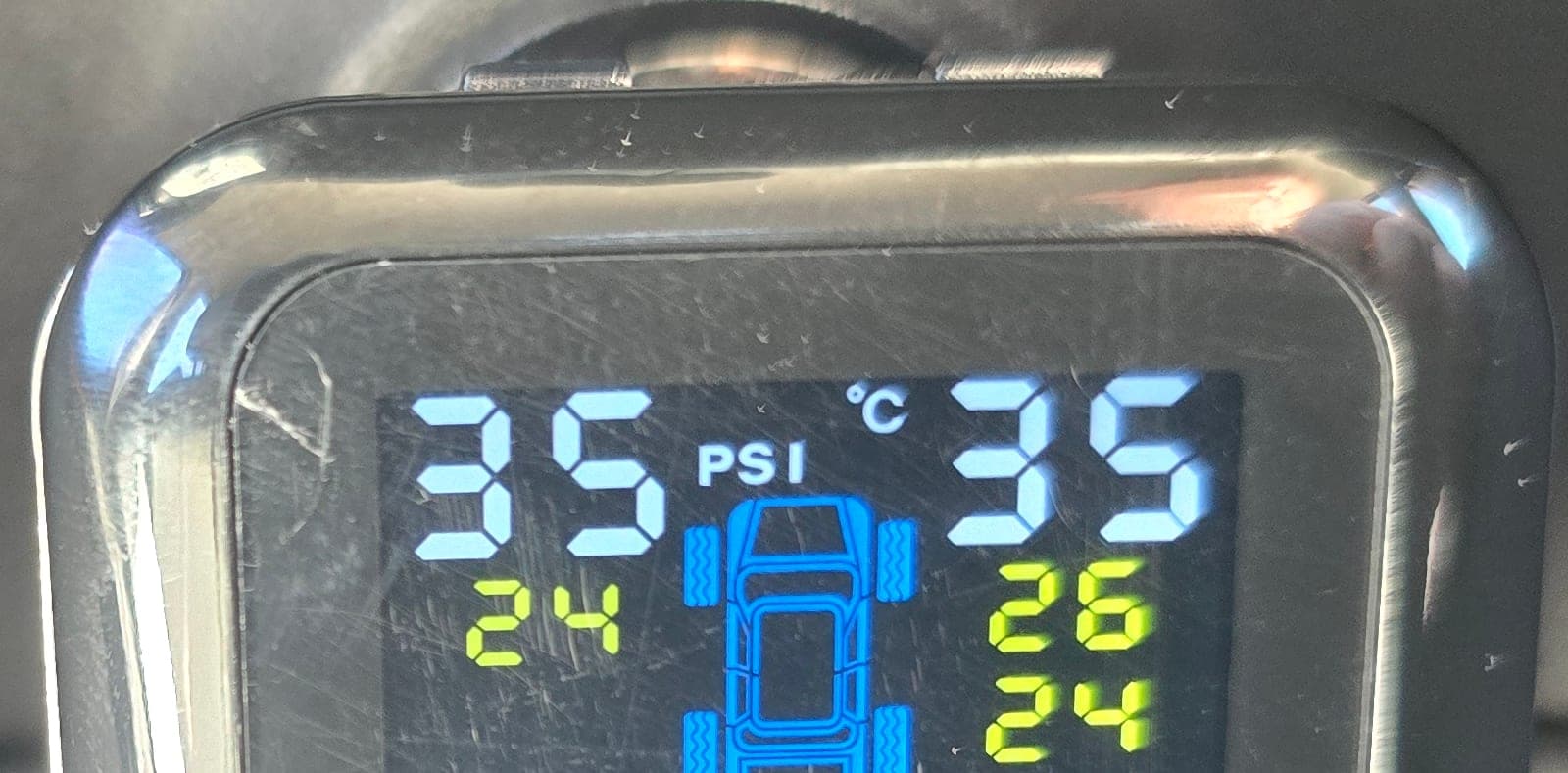
It's warning you: a leak, low or high pressure, high temperature, or a low sensor battery. Pull over when it's safe and check.
A sensor dropped off the screen. Why?
Usually a flat sensor battery or interference. Try a fresh battery first.
Why does a tyre read 0?
The sensor may be off or its battery flat. Make sure it's screwed down firmly so it presses the valve pin.
Why are my pressures higher when I'm driving?
Heat from driving raises the pressure. That's normal. Set your pressures when the tyres are cold.
The solar screen is blank. What now?
It sleeps when you park to save power and wakes when it senses movement.
Still stuck? Email info@flatmate-tpms.com