


How to Check Tyre Pressure the Right Way (Step-by-Step Guide)
Check tyre pressure when the tyres are cold, using the pressure printed on your vehicle's tyre placard — usually inside the driver's door jamb — not the number on the tyre sidewall. Unscrew the valve cap, press a quality gauge on firmly, compare the reading to the placard, and add or release air as needed. Repeat every few weeks and before any long trip.
What pressure should your tyres actually be?
Your vehicle's recommended pressure lives on the tyre placard: check the driver's door jamb first, then the fuel filler flap or glovebox. Most passenger cars sit between 30 and 38 psi, with a higher figure listed for full loads.
The number moulded into the tyre sidewall is the tyre's maximum pressure — not a recommendation. Inflating to it wears the tread centre, hardens the ride and shrinks your grip.
How to check tyre pressure: step by step
Make sure the tyres are cold — driven less than 2 km, or parked for 3 hours or more. Driving heats the air inside and inflates the reading.
Find your placard pressure for the current load — normal or fully loaded/towing.
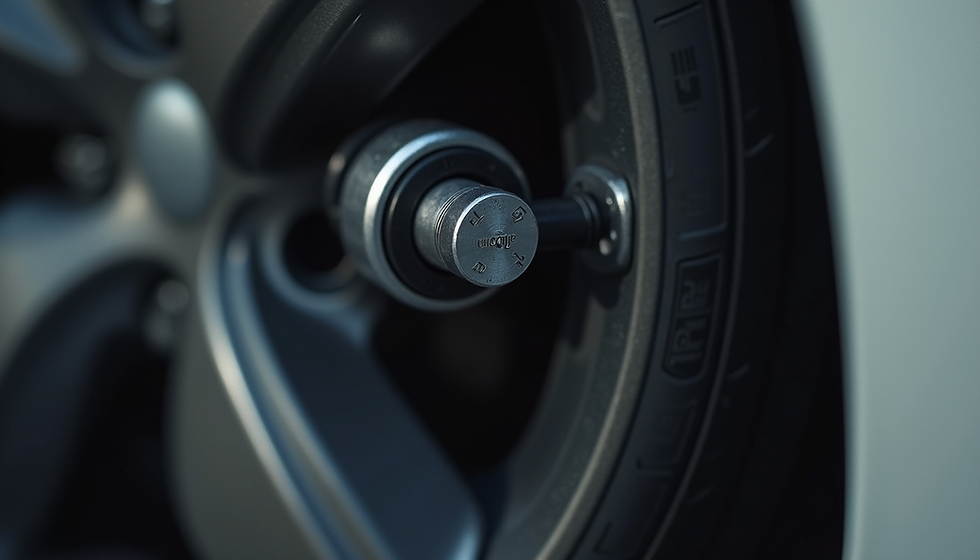
Unscrew the valve cap and press the gauge on firmly and squarely. A brief hiss is fine; a long hiss means re-seat the gauge.
Read and compare. Low? Add air and re-check. Over? Press the small pin in the valve centre to bleed a little out.
Repeat for all four tyres — pressures rarely fall evenly.
Do the spare while you're there. A flat spare is the classic discovery at the worst possible moment.
How often should you check?
Every 2–4 weeks in normal driving — tyres naturally lose around 1–2 psi a month through the rubber.
Before every long trip, and again mid-trip if you're towing. Our caravan pressure guide covers the 4psi rule for verifying you've got it right.
Whenever the season turns — pressure falls about 1 psi for every 10°C drop in temperature.
After any kerb strike, pothole hit or off-road run. Airing down for sand or gravel? See our 4WD pressure guide.
Can you trust the servo air gauge?
Treat public gauges with healthy suspicion — they get dropped, driven over and baked in the sun, and independent checks regularly find them reading several psi off. A quality pocket or digital gauge costs little and pays for itself. The step beyond that is a tyre pressure monitoring system, which gives you live readings for every tyre without kneeling on the servo forecourt — and alerts you between checks, which is when punctures actually happen.
Frequently asked questions
Should front and rear tyres be different pressures?
Often, yes — many vehicles specify different front and rear figures, especially utes and anything that carries loads over the rear axle. Always follow the placard's split.
Is 40 psi too high for a passenger car?
For most passenger cars the placard sits between 30 and 38 psi, so 40 psi is usually over — unless your placard specifies it for full-load or towing conditions. The placard beats any rule of thumb.
Do valve caps actually matter?
Yes. They're the second seal that keeps dust and moisture off the valve core. A missing cap won't deflate your tyre overnight, but grit in the valve eventually will.
Questions about your setup? Call 0448 626 964 — the Flatmate team installs and tests this gear on Australian roads every week.

Comments