


4WD Tyre Pressures for Sand, Gravel and Highway: The Practical Guide
There's no single correct tyre pressure for a 4WD — there's a correct pressure for the surface you're on, the load you're carrying and the speed you're doing. Get the combination right and the same vehicle grips better, rides better and punctures less. Here's the working guide Aussie tourers actually use.
Why airing down works
Dropping pressure doesn't make a tyre wider so much as longer — the contact patch stretches, spreading your weight over more rubber. That means flotation on sand, compliance over rocks and corrugations, and fewer staked sidewalls because the carcass can wrap around a sharp edge instead of being punched by it.
Highway: the placard is king
On sealed roads, run the vehicle placard figure (driver's door jamb on most 4WDs) — typically mid-30s psi, higher when loaded for touring. Under-inflation on bitumen builds heat, and heat is what kills tyres at speed.
Gravel and corrugations: roughly minus 25 per cent
Coming off the tar onto a corrugated shire road, drop to around 75–80 per cent of highway pressure — say 38psi down to 28–30psi. The ride improves instantly, the tyre stops skipping across corrugation crests, and puncture risk falls. The discipline that comes with it: keep speed at or under 80km/h, because a softer tyre run fast runs hot.
Sand: start at 16, work down
For beach and dune work, 16psi is the classic starting point. Struggling in soft stuff? Step down through 14 towards 12psi — that's usually the get-unstuck zone. Below that you're in bead-slip territory: sharp turns or spinning wheels can pop a tyre clean off the rim. Keep steering inputs gentle, keep momentum steady, and lower your speed to match the pressure.
Rock and mud, briefly
Low-range rock work sits around 20–24psi for sidewall compliance without rim strikes. Mud is similar, though tread choice matters more than pressure. In both cases the rule is the same: slow speed is what makes low pressure safe.
The step everyone skips: airing back up
Every pressure drop is a loan, not a gift — it must be paid back the moment you return to higher speeds. Driving home on the highway at sand pressures is how sidewalls overheat and fail an hour later. A portable air compressor in the boot turns reinflation from a servo mission into a ten-minute job at the exit track.
Set your TPMS for the terrain
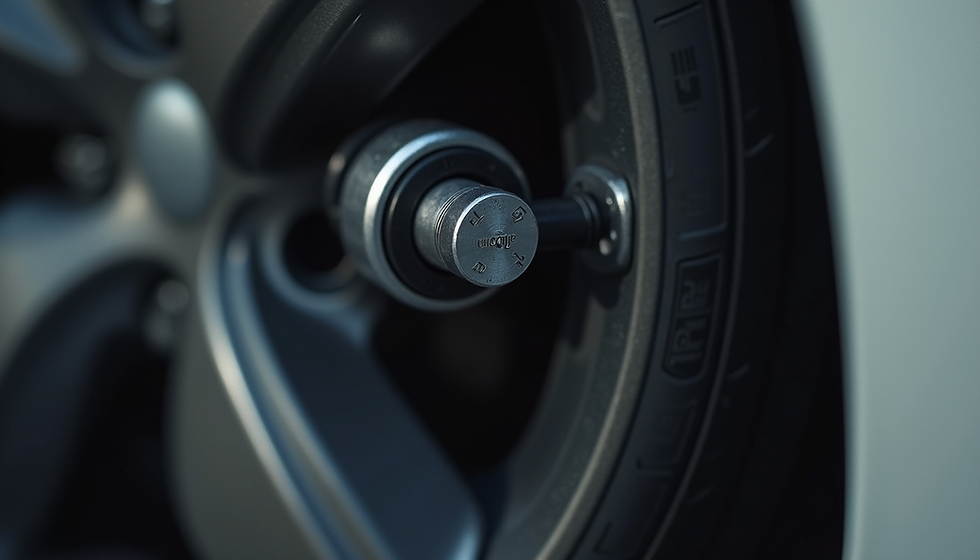
A monitoring system earns its keep off-road twice over. First, it shows you the actual pressure at each corner while you're airing down — no crawling around with a gauge four times. Second, a good unit lets you adjust the low-pressure alarm so you're not listening to false alerts all day at 16psi on the beach — then tighten it back up for the highway. The Aura does exactly that, and its temperature readout is your early warning if a soft tyre starts cooking on the drive out.
Quick reference
Highway: placard pressure, always
Gravel: ~75–80% of placard, max ~80km/h
Sand: 16psi start, 12–14 to recover, gentle steering
Rocks/mud: 20–24psi, low speed
Reinflate the moment you're back on fast surfaces
Browse the full TPMS range for 4WDs, caravans and trucks, or call 0448 626 964 and talk it through with someone who's done the Simpson with sensors fitted.

Comments