
External sensors are easy to fit because they screw on by hand. That same ease is why people ask whether they can be pinched. This post covers three things: locking them on, parking habits, and what to do when one goes missing.
If you're still choosing between sensor types, read internal vs external TPMS sensors first.
Why can external sensors go missing?
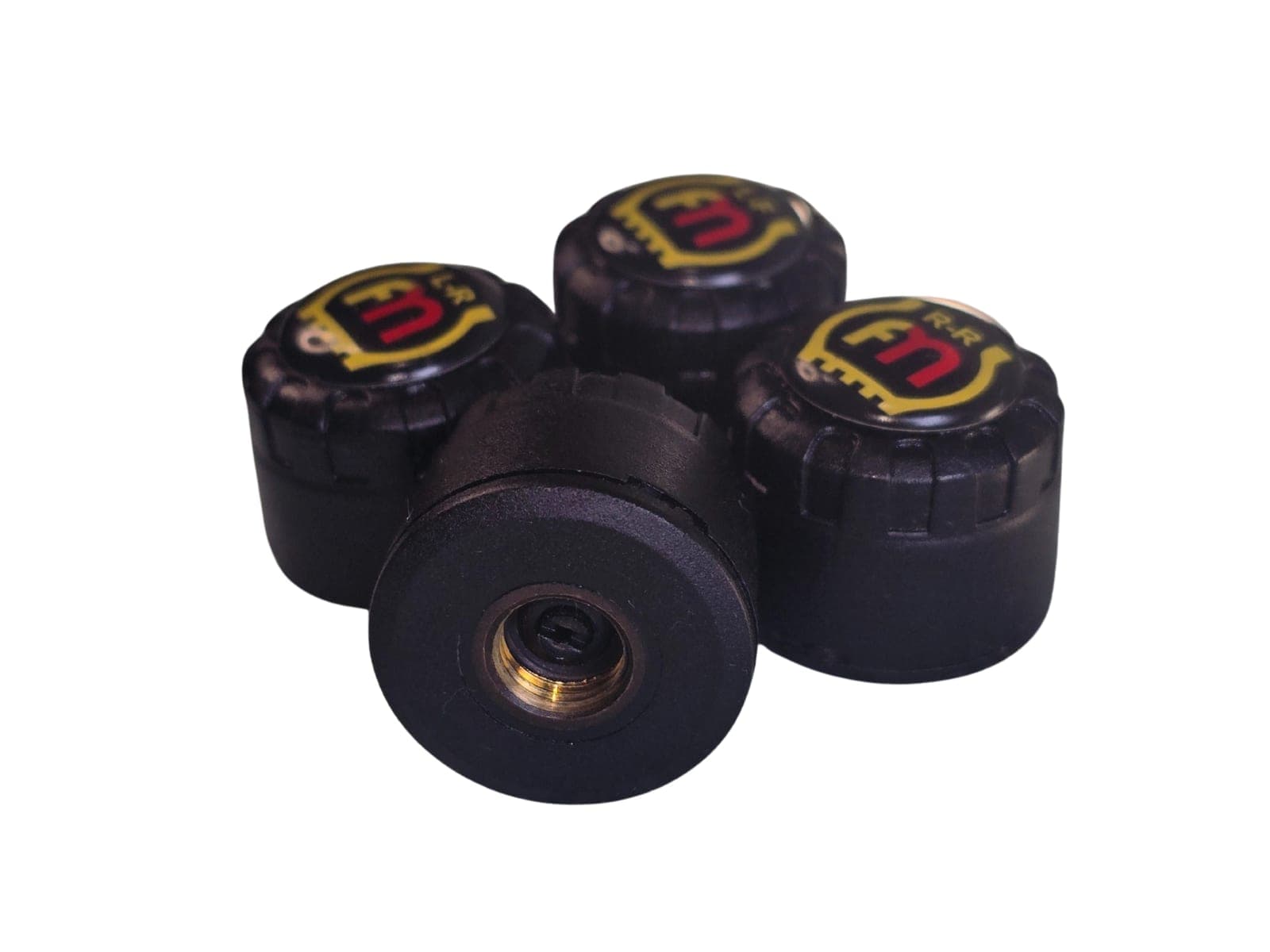
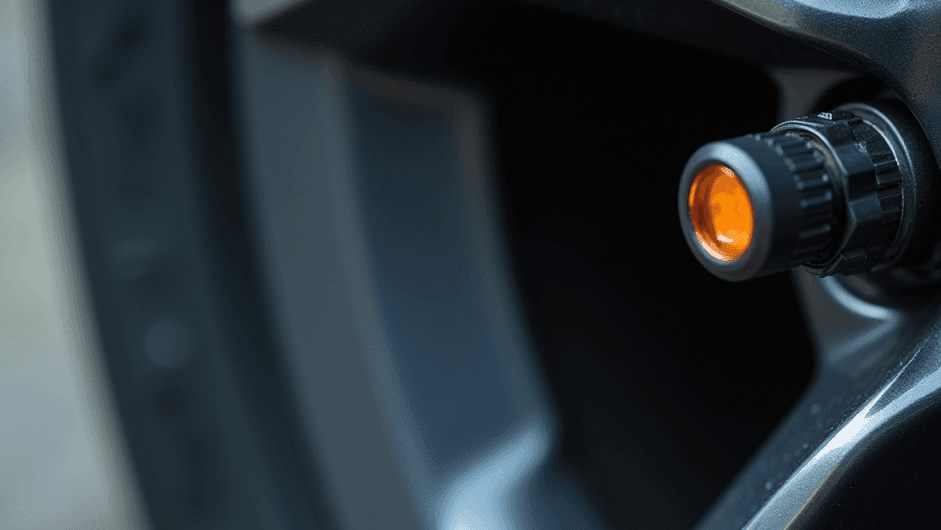
An external sensor takes the place of the valve cap. It screws onto the valve stem, so it sits on the outside of the wheel.
That's what lets you fit it yourself in minutes. It also means a sensor with nothing locking it on can be unscrewed.
Not every missing sensor is stolen. One put down at a boat ramp, or left on the bench after a battery swap, is just as gone.
How do the Aura's anti-theft locking nuts work?
The Aura A-Series comes with anti-theft locking nuts in the box. So does the ULTIMATE Bundle, which includes an Aura A4 Solo.
Here's how the nut goes on:
- Unscrew the dust cap from the valve.
- Fit the anti-theft nut onto the valve.
- Screw on the sensor marked for that wheel.
- Tighten the nut up against the sensor with the small wrench from the box. This locks it on.
- Wipe soapy water over the sensor and valve. No bubbles means it's sealed.
Once it's locked, the nut needs the supplied tool to undo. Keep that tool somewhere you'll find it. You need it to take a sensor off for a battery swap, at a boat ramp or to move the kit to another vehicle.
The full fitting job is in how to fit the flatMATE Aura TPMS.

Where should you park to keep your sensors?
A lock nut is one layer. Simple habits add another.
- Park where you can see the rig when you stop for a meal or the night, if you can.
- Pick a busy or well-lit spot over a dark, empty corner. It's harder for anyone to work at your wheels unnoticed.
- Storing the van for a while? You can take the sensors off, screw plain caps on the valves, and keep the sensors together somewhere dry. Put each one back on the wheel it's marked for.
- Off to the tyre shop? Take the sensor off that wheel first, or hand over the locking tool with the keys.
Tyres slowly lose air as they sit. After a long break, check every tyre with a gauge before the first drive.
How do you know a sensor has gone?
The quickest check is a walk around the rig. Look at each valve and see that its sensor is there.
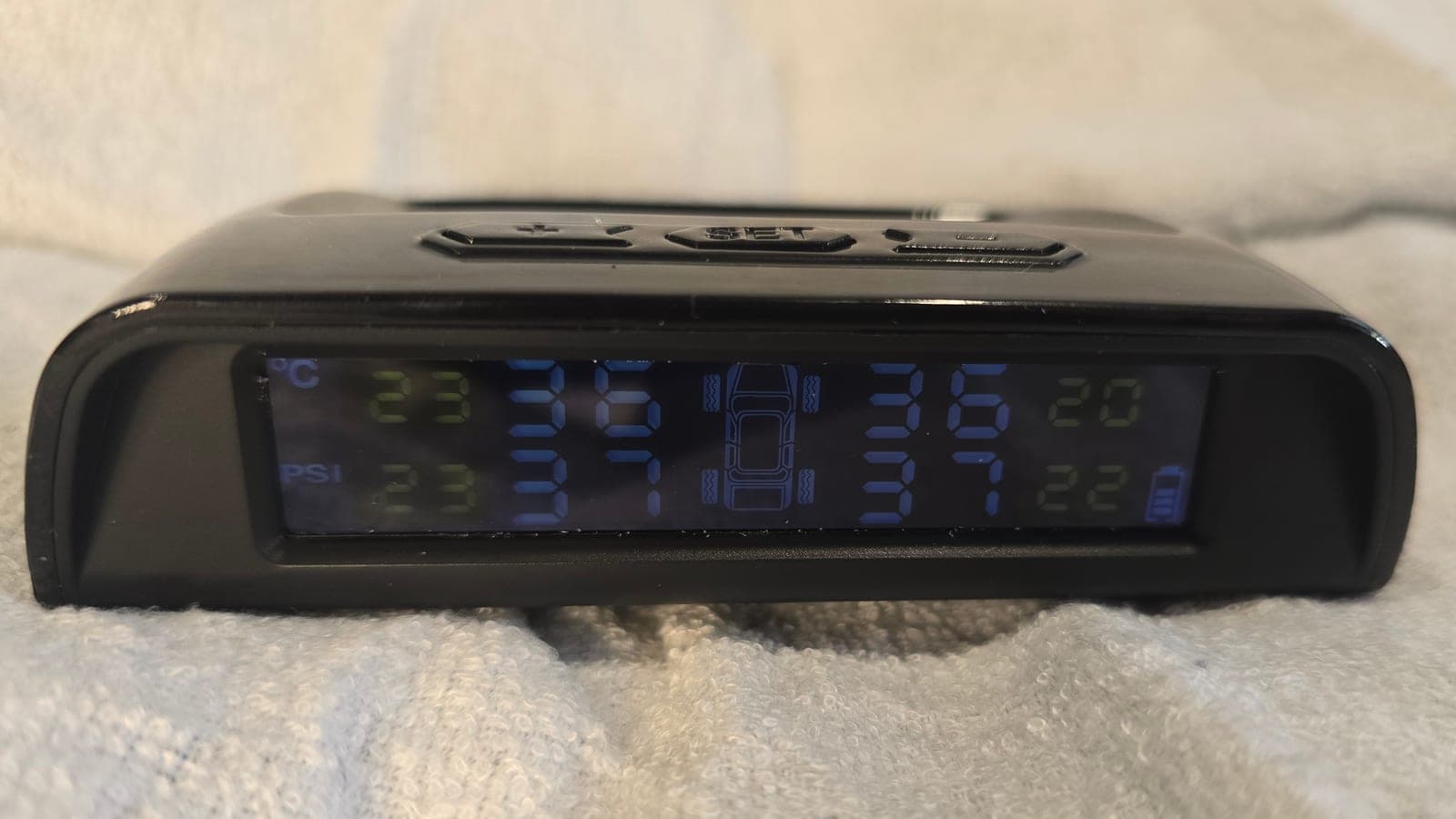
Then look at the screen before you pull out. Every tyre with a sensor should show a reading. A tyre that reads 0, or shows nothing, can mean its sensor is off. Some systems only refresh readings every so often, so the walk-around is the surer check.
A blank tyre isn't always a missing sensor. A flat sensor battery or a weak signal can do the same thing. TPMS not working? walks through those causes.
A TPMS is an extra set of eyes. It does not replace checking your tyres by eye and with a gauge before you drive. Our pre-trip tyre check covers what to look at.
What should you do if a sensor goes missing?
Work through these in order:
- Check that tyre with a gauge before you drive on. Look the valve over too.
- Screw a plain valve cap on the bare valve. It keeps grit and water out. A spare set of caps in the car makes this easy.
- Check that tyre by hand before each trip. Until the sensor is replaced, the screen isn't watching it.
- Email info@flatmate-tpms.com. Spare sensors aren't in the shop yet, so tell us which kit you have and which wheel lost its sensor, and we'll sort it out.
If the sensor turns up later, put it back on the wheel it's marked for.
Would internal sensors be harder to pinch?
Internal sensors sit inside the tyre, usually held on the valve. They're out of sight and out of reach.
The trade-off is fitting and upkeep. A tyre shop fits them and balances the wheel. Their battery usually can't be swapped, so the whole sensor is replaced when it runs down.
flatMATE kits use external sensors. If out of sight matters most to you, get a quote for internal sensors by email.
Your next step
Find the locking tool from your Aura box and put it somewhere you'll remember. Next time you stop, walk around the rig and check every sensor is on and every tyre shows on the screen.
Still choosing a kit? Answer a few questions in find my kit to see the one that fits your rig.
Questions
Can I move locked sensors to another vehicle?
Yes. External sensors unscrew and the screen goes with them. On an Aura, undo each locking nut with the supplied tool first.
Do I take the sensor off to add air?
Yes. An external sensor sits on the valve, so you take it off to add air. On an Aura, undo the locking nut with the supplied tool first, then lock it back on afterwards.
Can I change a sensor battery with the locking nut fitted?
Take the sensor off the valve first, which on an Aura means undoing the locking nut with the tool. Swap the coin battery, refit the gasket, screw the sensor back on, lock it again and do the soapy-water leak check.
Not sure what your rig needs? Email us your rig: info@flatmate-tpms.com