
Most caravanners set pressure from the placard and leave it. That's a sound start. But a van that has gained water, gear and a few years of "just in case" can weigh well more than it did when the placard was written. This post is about the next step: finding out what your van really weighs, and what that means for each tyre. For the placard basics, see our caravan tyre pressure guide.
Why does load set the right tyre pressure?
A tyre carries its load on the air inside it. Pressure is what holds the tyre up. A heavier load needs more pressure to carry it. That is why tyre makers publish load and inflation tables: each row pairs a pressure with the most weight the tyre can carry at that pressure.
Too little air for the weight, and the sidewalls flex more with every turn of the wheel. Flexing makes heat. Too much air for a light load, and the tread sits harder on the road than it needs to.
That is why one number can't suit every van. The right pressure depends on the tyre and the load it actually carries.
What do you need to know before you weigh?
Some terms come up at the weighbridge. Your van's compliance plate shows its rated tare, ATM and GTM. Ball weight is one you work out yourself:
- Tare: the empty van.
- ATM (aggregate trailer mass): the most the loaded van may weigh in total, including the weight on the tow ball.
- GTM (gross trailer mass): the weight carried by the van's own wheels while it is hitched to the car.
- Ball weight: the downward weight the van puts on the tow ball.
Your tyres carry the GTM, not the ATM. The ball weight is carried by the tow vehicle. This matters when you work out the load on each tyre.
How do you weigh a caravan at a weighbridge?
Pack the van exactly as you travel. Fill the water tanks the way you normally would, load the gas, the food and the gear. A van weighed empty tells you little about how it tows.
Then follow these steps:
- Find a public weighbridge near you. A search for "public weighbridge" plus your town is a good start. Ask the operator when it's quiet.
- Stay hitched and pull forward until only the van's wheels are on the bridge. Note the reading. That is your GTM, the weight your van's tyres carry.
- Move the van fully onto the bridge, lower the jockey wheel onto it, unhitch and drive the car off. Note the reading. That is your ATM as packed.
- Take the GTM from the ATM. That gives you your ball weight.
- Check all of it against your compliance plate, then write the numbers down with the date and what was on board.
Your weighbridge may offer axle-by-axle readings. If it does, ask for them. They show how the load is split.
How do you turn the weight into a load for each tyre?
Divide your GTM reading by the number of tyres. A single-axle van has two tyres. A tandem has four.
It's rarely an even split. Gear, water and gas sit more on one side or toward one axle. So treat the even split as a minimum, not the answer. If you have axle weights, use the heavier axle. Ask the tyre shop or tyre maker how much margin to add for uneven loading.
The load and speed ratings guide explains what the load index on your sidewall means. Check that the tyre's rated capacity sits comfortably above your figure.
Where do the tyre maker's load and inflation tables live?
The table belongs to the tyre, so look for it in these places:
- The tyre maker's website. Look for a technical data book or a load and inflation table for your tyre size and model.
- A tyre shop that works on caravans. They hold the data books for the brands they sell.
- Your van builder, if they supplied the tyres.
You'll need your exact tyre size and load index from the sidewall. Find your per-tyre load in the table, then read across to the pressure that carries it. That cold pressure is your target.
We haven't printed a pressure chart here on purpose. Pressures differ between tyre brands, models and load ratings. The tyre maker's own table is the one to trust.

How often should you re-check the pressure?
A weighbridge visit gives you a snapshot. It doesn't tell you what the tyres are doing on the road. Always measure pressure cold, as covered in how to check tyre pressure.
Weigh again whenever the load changes in a big way. That might be a new water tank, a bigger fridge, a bike rack or a long trip with extra gear. A set pressure only suits the load it was set for.
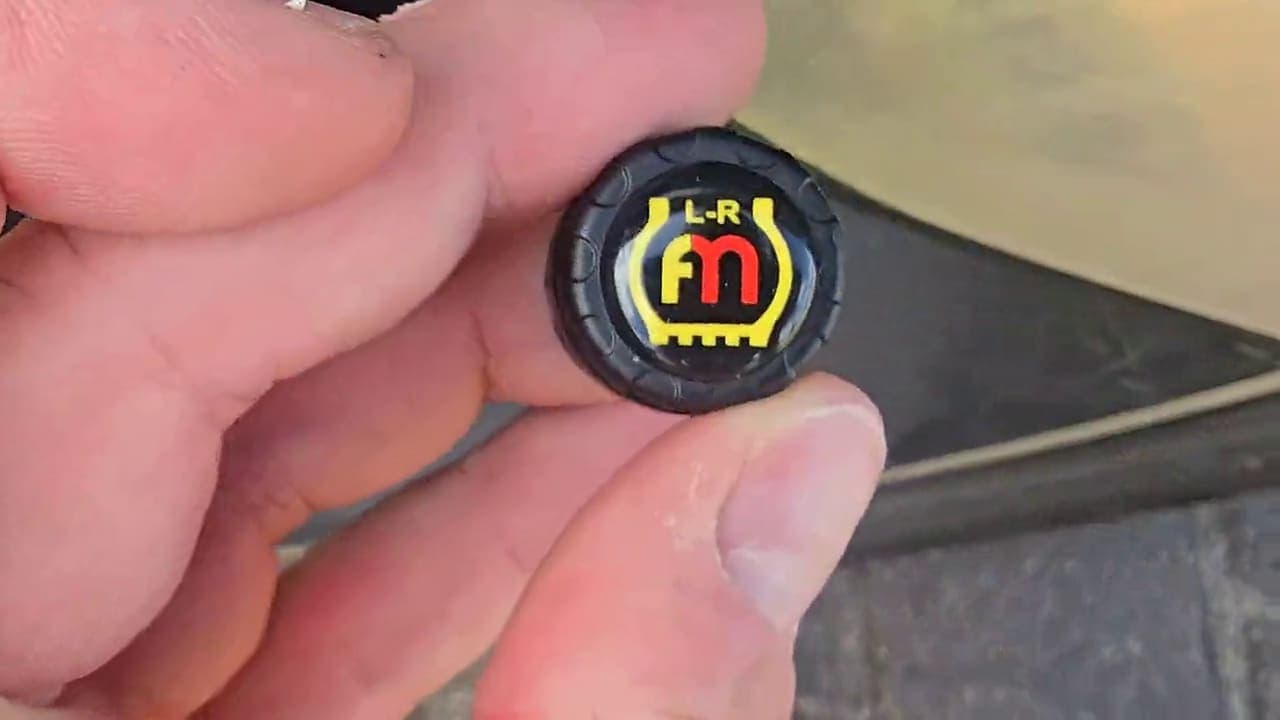
A TPMS shows you live pressure and temperature for each tyre while you tow, so you can see when a tyre moves away from the target you set. It warns you early. It doesn't set the pressure for you. For kit options, see caravan TPMS, or use Find my kit to match one to your rig.
A TPMS is an extra set of eyes. It does not replace checking your tyres by eye and with a gauge before you drive.
What should you do next?
- Load the van the way you travel.
- Book a trip to a public weighbridge.
- Work out the load on each tyre.
- Look it up in your tyre maker's table.
- Set the cold pressure and write it where you can see it.
Questions
Can I use the sidewall pressure for my caravan?
No. The pressure moulded into the sidewall is the tyre's maximum, not a target. Set the cold pressure from your load and the tyre maker's table, or start from the placard.
Should I weigh my caravan loaded or empty?
Loaded, exactly as you travel, with water, gas and gear on board. An empty van tells you its tare, but the tyres carry the loaded weight.
Does my van's weight change the tyre pressure I need?
Yes. A tyre needs more pressure to carry a heavier load, which is why tyre makers publish load and inflation tables. Look up your per-tyre load in the table for your exact tyre.
Where can I find a load and inflation table for my tyres?
Check the tyre maker's website for the data book for your tyre size and model. A tyre shop that works on caravans can also look it up for you.
Not sure what your rig needs? Email us your rig: info@flatmate-tpms.com