


What Does the TPMS Warning Light Mean? (And What to Do When It Comes On)
The TPMS warning light — a yellow horseshoe shape with an exclamation mark — means at least one of your tyres has dropped well below its recommended pressure. Many factory systems only trigger once a tyre is roughly 25 per cent under-inflated, so treat the light as urgent: check all four tyres with a gauge as soon as it's safe to stop.
What does the TPMS symbol look like?
It's a flat-bottomed horseshoe with tread marks at the base and an exclamation mark in the middle — essentially a tyre cross-section. Drivers regularly mistake it for a brake or engine symbol, which is one reason surveys keep finding that a large share of motorists can't identify it.
A solid light means low pressure in one or more tyres. A light that flashes for 60–90 seconds each time you start the car and then stays on usually means the system itself has a fault — commonly a dead sensor battery — not a pressure problem.
Why is my tyre pressure light on?
A slow puncture — a screw or nail letting air out over hours or days. The most urgent cause.
A cold snap — pressure falls roughly 1 psi for every 10°C drop, so the first cold morning of winter lights up dashboards across the country.
Natural air loss — tyres seep roughly 1–2 psi a month through the rubber itself, even with no puncture.
A recent tyre change or rotation — some systems need a reset or relearn after wheels are moved.
A failing sensor battery — factory sensor batteries are sealed inside and typically last 5–10 years.
What should you do when the light comes on?
Slow down and avoid hard braking or sharp steering until you know what you're dealing with.
Stop somewhere safe and do a walk-around. Look for a visibly soft tyre, a nail head, or a bulge.
Check all four pressures with a gauge — don't guess which tyre it is. Compare against the placard inside the driver's door jamb.
Inflate to placard pressure and note which tyre was low.
If the same tyre drops again within days, you have a puncture — get it repaired, don't keep topping it up.
If pressures are all correct but the light stays on, have the sensors checked.
Why the factory light alone isn't enough
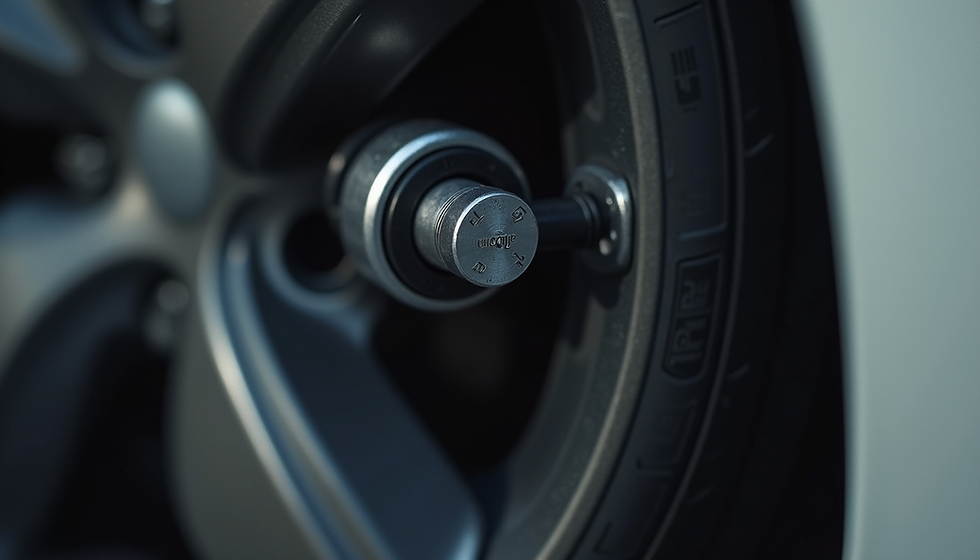
The maths is the problem. If your placard says 38 psi, a system that alerts at 25 per cent under-inflation won't say a word until you're near 28 psi — a level that's already generating serious heat in the tyre carcass at highway speed. Factory systems on many cars also show no live numbers, no temperature, and nothing at all for a caravan or trailer behind you. An aftermarket tyre pressure monitoring system shows live pressure and temperature for every tyre — tow vehicle and van — and alarms within seconds of a leak starting, not 10 psi later.
Frequently asked questions
Can I keep driving with the TPMS light on?
Short distances at reduced speed to a safe stopping point, yes. Ignoring it for days is how slow leaks become blowouts — under-inflation is a leading contributor to highway tyre failures.
Why did the light turn off by itself?
Almost always temperature. Cold overnight air dropped the pressure enough to trigger the alert; driving warmed the tyres and pressure rose again. The tyre is still under-inflated when cold — set it properly with a gauge.
Why is my TPMS light flashing?
A flash pattern at startup indicates a system fault rather than low pressure — most often an expired sensor battery. A tyre shop can test which sensor has died.
Want live numbers instead of a mystery light? See the Flatmate TPMS range or call 0448 626 964 — real person, 24/7.

Comments