
Every kilometre on soft tyres costs you a little: more fuel, and tread that wears out sooner. It adds up when you tow or drive long distances. Here's where the cost comes from, and how to stay on top of it.
Soft tyres cost fuel
A tyre without enough air flattens out more where it meets the road. It takes more effort to roll, so the engine works harder and uses more fuel.
Caravan and car tyres slowly lose air, and temperature swings move the pressure around. A check at the servo once a month can miss a lot in between.
Soft tyres wear out faster
- Uneven wear. A soft tyre wears its outer edges faster than the middle. A tyre pumped too hard wears the middle.
- Heat. A soft tyre flexes more and runs hotter, and heat breaks down the tyre's structure over time.
Either way, you replace tyres sooner than you should.
How a TPMS helps
- Pressure you can see. Every tyre's pressure on the dash, so a slow leak doesn't go unnoticed for weeks.
- Even wear. Tyres kept at the right pressure wear evenly and last longer.
- An early warning. Catching a slow leak early can save the tyre, and sometimes the wheel.

Keep it simple
- Set your tyres cold to the placard pressure. Here's how to check tyre pressure.
- Set your TPMS alarms for your load.
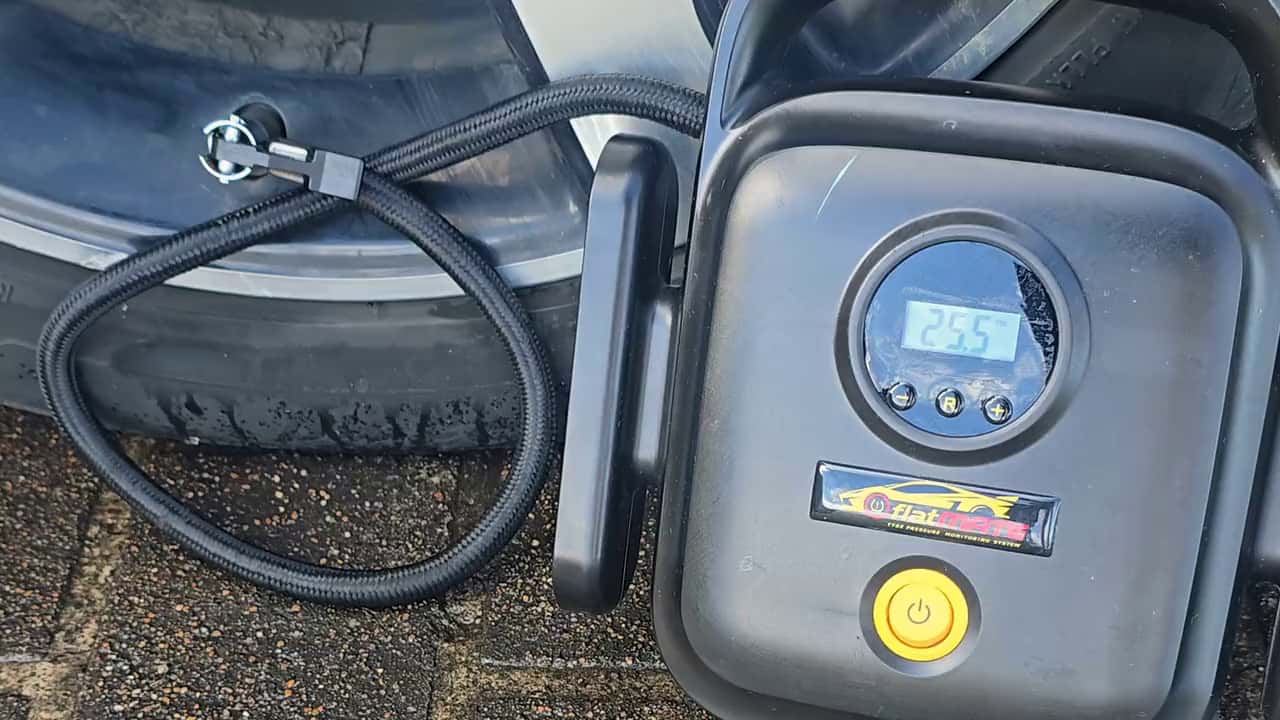
- When a tyre drifts low, pump it back up. If the same one keeps dropping, get it checked for a puncture.
For more everyday checks, see our pre-trip tyre check, or compare every TPMS kit.
Not sure what your rig needs? Email us your rig: info@flatmate-tpms.com