


The Ultimate Guide to TPMS in Australia: Why This Essential Tool Is Your Guaranteed Protection in the Outback
- Sep 30, 2025
- 3 min read
Every Australian driver knows the serious reality of our roads: long distances, extreme heat, and the unforgiving vastness of the outback. When you’re miles from the nearest town, a slow leak or a sudden blowout isn't just an inconvenience—it's a serious safety hazard and a trip-ruiner.
This is why a Reliable Tyre Pressure Monitoring System (TPMS) is no longer a luxury; it is an Essential piece of gear for anyone hitting the highway, towing a caravan, or tackling a 4WD track.
Why Your Vehicle—Especially Your Caravan—Needs an Aftermarket TPMS
While TPMS has been mandatory on all new Australian passenger vehicles since 2012, this factory-fitted system often has critical shortcomings, particularly for the unique demands of Aussie driving.
1. The Extreme Heat and the Blowout Danger
Australian summers create remarkable heat on the bitumen. Under-inflated tyres generate excessive friction, which drastically increases the internal temperature. This heat damages the bonding within the tyre components, making a blowout a real risk.
A quality aftermarket TPMS doesn't just monitor pressure; it provides real-time temperature readings for every tyre. Getting a high-temperature alert can save your tyre and prevent a dangerous failure long before the tyre pressure even drops significantly.
2. The Caravan Crisis: Overloading and Under-Inflation
The majority of caravan owners on Aussie roads are running their tyres under-inflated, and often overloaded. Under-inflation is a primary contributor to swaying, premature tyre wear, and blowouts in caravans.
Factory TPMS systems cannot monitor the tyres on your trailer or caravan. Aftermarket systems (like those from Safety Dave or iCheckTPMS) are built for this challenge:
High Capacity: They can monitor up to 22 or more tyres (tow vehicle and a multi-axle trailer).
Long-Range: They feature strong wireless range to transmit data from the furthest axle to the in-cab display (up to 200m or more).
Precision Alerts: They provide an immediate audible and visual warning for fast air leakage or temperature spikes.
3. The 4WD Challenge: On-Road vs. Off-Road Pressures
For the 4WD enthusiast, airing down your tyres is Essential for traction and comfort on sand and corrugations. However, OEM TPMS is calibrated for highway pressures. If you air down from 40 PSI to 18 PSI for the tracks, the factory system will immediately scream a low-pressure warning, rendering it useless.
Look for systems with a dedicated "Off-Road Mode" (a feature offered by brands like iCheckTPMS) that allows you to quickly change the alarm threshold or ignore alerts when running lower pressures. This gives you the best of both worlds: safety on the bitumen and control on the tracks.
Direct vs. Indirect: Making the Smart Choice
When selecting a TPMS, you will encounter two types:
TPMS Type | How It Works | The Crucial Difference for Aussies |
Indirect (iTPMS) | Uses the ABS sensors to detect a change in wheel speed (implying one tyre is smaller due to under-inflation). | This system only alerts you after a tyre has lost a significant amount of pressure (often 20%), which can be too late in the heat. |
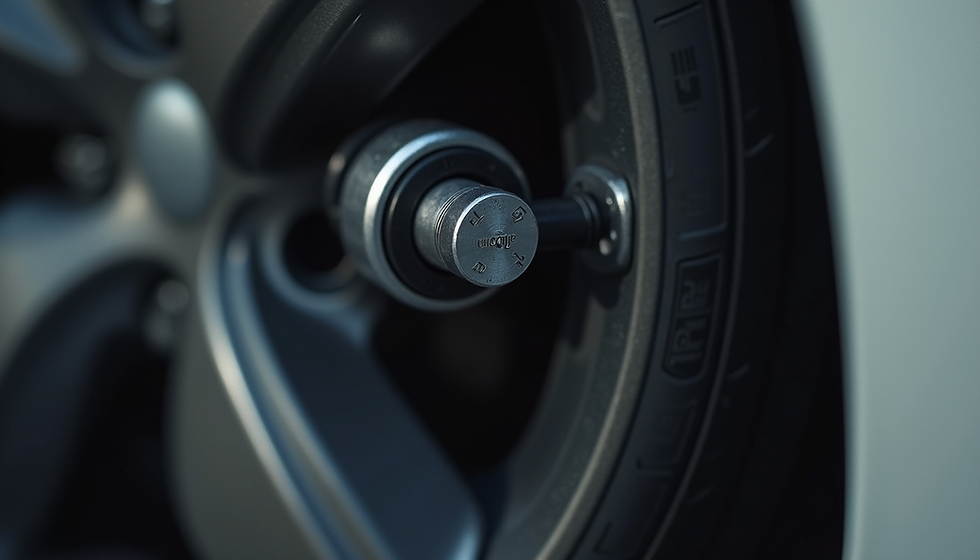
Direct (dTPMS) | Uses a Reliable sensor inside or on the valve stem of each tyre to measure pressure and temperature directly and in real-time. | This is the Proven system for Australian conditions. It gives you an immediate, quantifiable reading (e.g., 32 PSI) and a faster warning of a puncture, saving your tyre. |
Final Word: Investing in a quality Direct TPMS is investing in peace of mind and Protection for your family and your rig. Don't wait for a blowout to discover how valuable this simple upgrade can be. Drive Smarter. Drive Safer.


Comments