


Holiday Ruined: The Essential Guide to Preventing Catastrophic Tyre Blowouts While Towing
- Oct 31, 2025
- 3 min read
Tyre blowouts can be a serious hazard, especially when towing a heavy caravan or trailer across vast Australian distances. They can lead to devastating accidents, significant damage, and the instant, frustrating end to your adventure. By implementing proper maintenance and awareness, you can significantly reduce the risk of a blowout and achieve true Peace of Mind on the road.
Here is how Flatmate-TPMS and proactive awareness can help prevent tyre blowouts on towing vehicles:

1. Maintain Correct Tyre Pressure (The
Foundation of Safety)
Incorrect tyre pressure is a leading cause of blowouts, particularly with the thermal and physical stress placed on caravan and trailer tyres.
Check Regularly: Check your tyre pressure at least once a month and before every trip, especially when towing heavy loads. Don't wait for a visibly flat tyre, as a 40 PSI tyre can look identical to a dangerous 20 PSI one.
Cold Inflation: Always check and adjust tyre pressure when the tyres are "cold" – meaning they haven't been driven on for a while or aren't in direct sunlight.
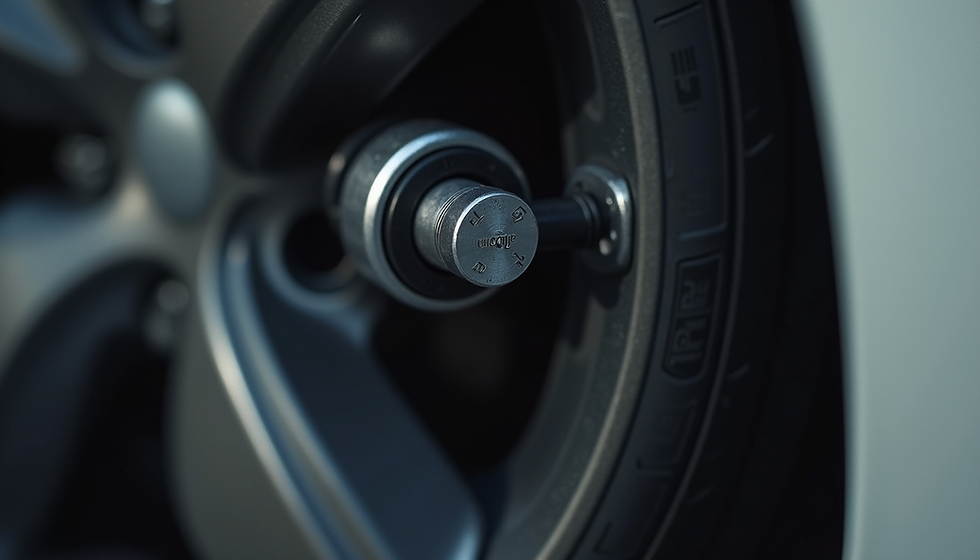
The Flatmate-TPMS Advantage: Our systems serve as your Vigilant 24/7 guardian, constantly monitoring pressure and temperature in real-time. This eliminates the uncertainty of a manual check and provides Accurate, Instant Alerts for slow leaks before excessive heat builds up and leads to a catastrophic failure.
Avoid Under- and Over-inflation:
Underinflated tyres cause the sidewalls to flex excessively, generating too much heat, which can lead to a blowout. They also wear unevenly and reduce braking and handling capabilities.
Overinflated tyres can be more susceptible to punctures and impact damage, and the rubber can weaken and stretch, increasing the risk of a blowout. Never inflate tyres beyond the maximum pressure listed on the tyre's sidewall.
2. Avoid Overloading (The Weight Risk)
Exceeding your vehicle's and tyres' load capacity puts immense strain on them, making them more prone to failure.
Check Load Ratings: Each tyre has a maximum weight it can handle, found on its sidewall. Do not exceed this limit.
Vehicle and Trailer Limits: Adhere to the weight limits for your vehicle and trailer, which can be found in your vehicle's manual or on the door jamb sticker.
Distribute Weight Evenly: When loading, spread the weight evenly across the vehicle and trailer to prevent excessive pressure on specific tyres. Ideally, about 60% of the trailer's weight should be in front of its axle.
Weight Distribution Hitches: Consider using a weight distribution hitch, especially for larger trailers. These hitches help distribute the load evenly between the tow vehicle and the trailer's axles, improving stability and reducing stress on the tyres.
3. Regular Tyre Inspections and Maintenance (Proactive Safety)
Proactive checks can identify potential issues before they become dangerous. This is where a TPMS adds a Survival Feature by monitoring heat—often the first sign of a bearing failure.
Visual Inspections: Regularly inspect tyres for signs of wear and tear, such as bald spots, uneven tread wear, cracks in the sidewall, bulges, cuts, or punctures.
Tread Depth: As tyre tread approaches 4/32” (approximately 3.2 mm), consider replacement. At 2/32” (approximately 1.6 mm), new tyres should be installed immediately.
Balancing and Alignment: Have your tyres professionally balanced and aligned to prevent uneven wear, vibrations, and to ensure the vehicle tracks straight. Misaligned wheels can cause uneven tyre wear.
Tyre Age: Tyres degrade over time, even if they appear in good condition. Replace old tyres as recommended by the manufacturer.
4. Drive Responsibly (Driving for Longevity)
Your driving habits significantly impact tyre longevity and safety.
Follow Speed Limits: Driving too fast can cause tyres to overheat, increasing the risk of failure. Be aware that towing speed limits can differ from regular posted speed limits and vary by state or region.
Avoid Sudden Movements: Sharp turns or sudden braking can stress tyres. Plan ahead and drive smoothly.
Beware of Potholes and Debris: Hitting potholes or road debris can damage tyres and lead to blowouts. Try to avoid them or slow down to minimise impact.
5. Choose the Right Tyres (Matching the Mission)
Selecting appropriate tyres for towing is crucial for safety and reliability.
Load Range: Choose tyres with a load range that can comfortably support the combined weight of your vehicle and trailer. Light Truck (LT) tyres are often designed for heavier loads and higher inflation pressures than Passenger (P) tyres.
Tyre Type: Depending on your needs, consider all-season, all-terrain, or trailer-specific tyres.
Size and Speed Rating: Ensure your tyres are the correct size and have an appropriate speed rating for your towing needs.
By following these recommendations, and integrating a high-quality system like Flatmate-TPMS into your routine, you can significantly reduce the likelihood of a tyre blowout and ensure a safer, more economical towing experience.

Comments