
Sway, or snaking, is when the van starts swinging from side to side behind the car. It can build fast at highway speed. Here are the common causes, and the checks that help prevent it.
Weight in the wrong place
This is the most common cause, and the one you control most.
- Too much weight behind the axle makes the van tail-heavy, and it can start to swing at speed.
- Load low and forward, over or just in front of the axles.
- Check your tow ball weight. A common guide is around 10 per cent of the loaded van's weight, within your car's and towbar's limits.
Soft tyres
Tyres without enough air squirm and flex. That softness exaggerates every small steering correction and wind gust, and the rig feels less stable.
- Set the van's tyres cold to the placard, adjusted for the load. Our caravan tyre pressure guide shows how.
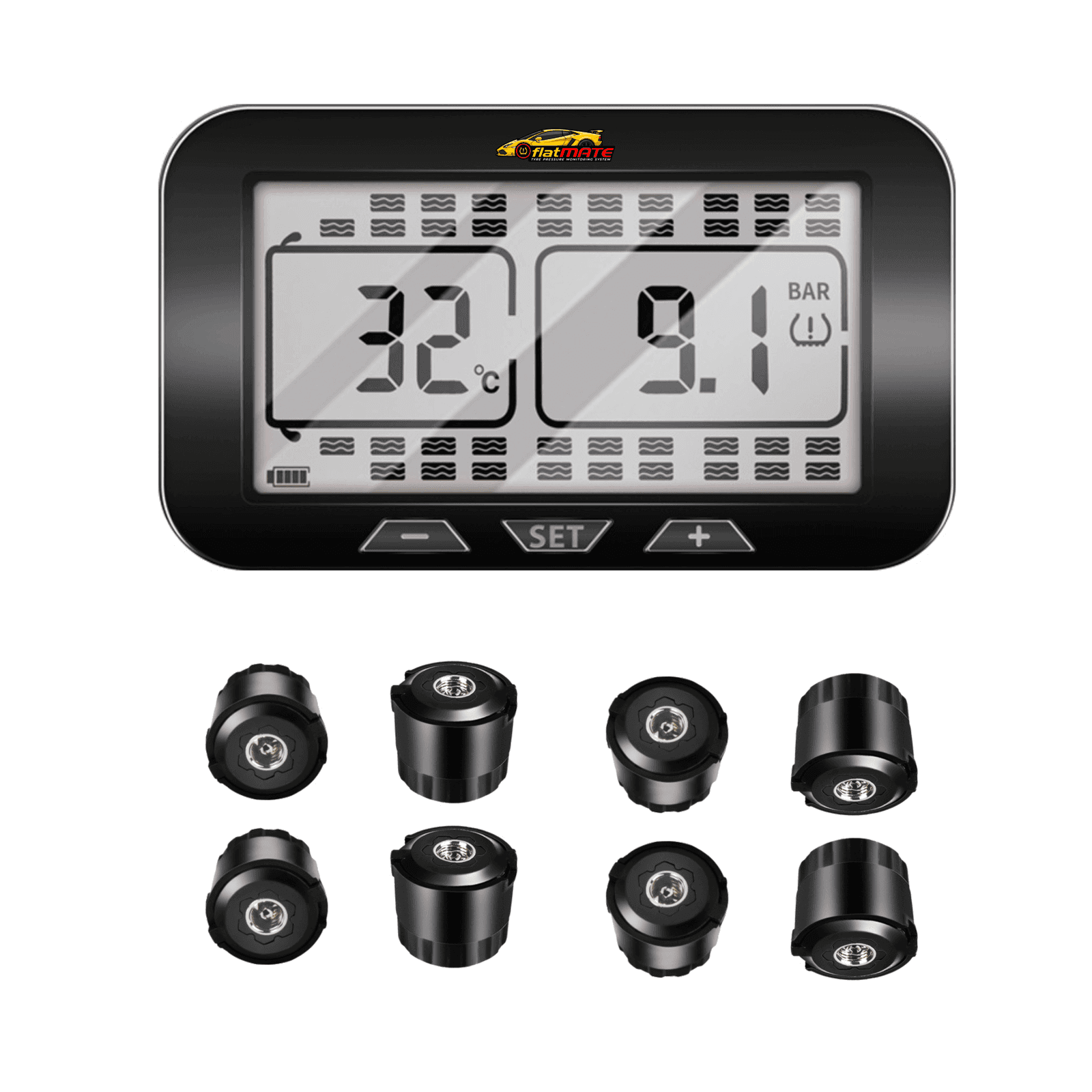
- Watch them as you drive. A caravan TPMS shows every tyre's pressure and temperature, car and van, so a tyre going soft stands out.
Speed, wind and passing trucks
The faster you go, the less margin you have. A rig that feels settled at 80 km/h can feel very different at 110 km/h.
Wind gusts, rough road edges and the push of air from a passing truck are common triggers. Ease off, keep the wheel steady and let the rig settle.

Worn or faulty gear
- Suspension and shock absorbers: worn ones let small movements build.
- Van brakes: faulty brakes make it harder to settle the van.
- Hitch and coupling: a worn tow ball, coupling or weight distribution hitch adds slack.
Have them checked at your van's service.
Before every trip
- Load heavy gear low and forward.
- Check your tow ball weight.
- Set the tyres cold to the placard for your load.
- Look over the hitch, safety chains and van brakes.
- Plan to drive at a speed where the rig feels settled.
More on setting up your van: caravan TPMS and preventing tyre blowouts when towing.
Not sure what your rig needs? Email us your rig: info@flatmate-tpms.com